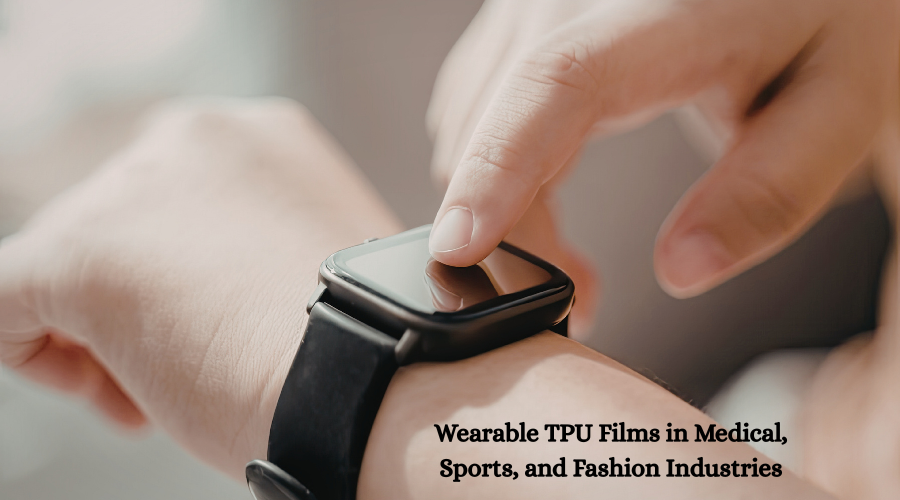
The materials in wearable products have evolved significantly over time. TPU film is an increasingly popular material. The material is flexible, durable, and light in weight, and has the ability to stretch, bend, and recover. It is also waterproof, breathable, and dermatologically safe. The properties are useful across a wide range of industrial applications.
Today, hospitals, sports fields, and luxury women's and men's collections can be found equipped with wearable TPU films. In this blog, you will learn how and why.
It is also beneficial to understand why TPU film is effective for wearable applications before getting into product development.
The TPU film is rubbery. It moves in harmony with the body; it is not torn or loses its shape. It is thin and light and therefore not bulky. It can be structured to be permeable to air and moisture but not to water. It is also durable and resistant to oils, abrasion, and chemicals. On top of all that, it adheres well to fabrics and other materials, making it easy to laminate onto fabrics.
These properties made TPU film so popular among manufacturers across various industries for wearable applications.
The medical field is one of the most stringent in terms of material requirements. Products used should be: safe, hygienic, long-lasting, and non-irritating to skin. All these requirements are readily achievable for TPU films.
Wound Dressings and Bandages
TPU film is one of the most widely used materials for the exterior layer of wound dressings. This decreases the risk of infection and the stability of the wound environment required for healing. The film is thin, and patients don't notice it. It moves with flexibility and won't separate from joints or curved body surfaces.
An ostomy pouch and skin patches.
Ostomy Pouches are worn for long periods against the skin. They must also be flexible, odor-resistant, and skin-friendly. For such use, TPU film is a perfect choice. It is also used in transdermal skin patches that deliver medicine through the skin. The film controls the rate of the medication release and helps to keep the patch in place while in use.
Wearable Medical Devices
Health monitors are becoming increasingly wearable. Heart-rate monitoring, glucose monitoring, and muscle monitoring devices must be placed near the skin and be comfortable. These devices employ sensors and electronics that are encapsulated in a TPU film. It is sweat-resistant and comfortable for the skin.
Overall, TPU film is skin-safe and can enable medical-grade applications. They are not harmful and prevent plasticizers such as phthalates; in most users, they do not cause any skin reactions. Medical-grade TPU films are put to the test and certified to international safety standards for skin contact.
Materials need to be hard-working in sports. Gear should be compact, flexible, robust, and sweat-and weather-resistant. TPU films have wide applications in sportswear and sports equipment.
Performance Sportswear
Sportswear companies employ TPU film laminates to maintain waterproof, breathable materials. They are utilized in running jackets, cycling clothes, ski suits, and outdoor clothes. The TPU layer provides resistance to wind and rain and is breathable, absorbing body heat and moisture. This will help the athlete avoid discomfort and wetness during heavy exercise.
TPU films are also used for compression garments. The film provides targeted support for the following muscles and joints while allowing greater overall mobility. This helps to make it perform better and prevent injury.
Protective Gear and Padding
TPU films are employed in shin guards, knee pads, and impact protection panels. The film can be shaped to diffuse impact and return to its original shape. This is great for any protective equipment that requires hard and comfortable. TPU padding is designed to move with the body, unlike hard plastics, which don't dig into the skin.
Footwear
TPU films are used in numerous parts of sports shoes. This outer layer can be densified with TPU to make it waterproof and wear-resistant. TPU overlays can provide structural and supportive features in the heel. Transparent TPU films are placed on the exteriors of the shoe to protect it and, for some brands, to put part of the design.
Absolutely, TPU Films can be used for water sports applications. They are 100% waterproof and resistant to chlorine and salt. They are used in inflatable sport equipment, wetsuits, waterproof bags, and buoyancy aids, which require air-tight seams to function.
TPU Films in the Fashion Industry
It may sound a little wild, but fashion is hardly the place for an industrial material. However, there has been a strong adoption of TPU films in modern clothing design and accessories.
Waterproof and Transparent Fashion.
Designed with clarity, TPU film, jackets, bags, and shoes are see-through, with no rejections. Material provides a futuristic look with practicality. It is light and non-scratch, and won't crack or yellow easily. Nowadays, transparent TPU fashion has been spotted in well-known fashion collections and is now available in mainstream shops.
Laminated Fabrics for Outerwear
Coats and jackets are among the many types of outerwear made from TPU laminated fabric. The purpose of this TPU, besides a sleek surface finish, is also to provide weather protection to the garment. The outcome gives you a cool item that's also usable. Fashion meets performance in a single offering to consumers.
Bags, Belts, and Accessories
TPU film is used as an alternative to leather in bags, belts, and shoes. It can look and feel like leather, but without animal products. This is easier to wash, less likely to be scratched, and also affordable. With more demand for vegan fashion, TPU film is a favored material in designing eco-friendly accessories.
Wearable technology is certainly one of the fastest-growing product segments worldwide. This is the rise and growth of smartwatches, fitness trackers, smart clothing, and medical monitoring devices. All products require materials that are flexible, durable, and body-friendly. TPU film possesses all the desired properties.
Manufacturers are discovering new, thinner, and more advanced TPU films for the needs of developers of wearable technology. Now films are being made (electric conductive) that generate electronic signals that work through them. This opens new opportunities for smart clothing and an integrated health-monitoring system.
TPU film has more advantages than most conventional plastics, including environmental friendliness. Not containing any harmful plasticizers, made without PVC, and is recyclable. Even renewable raw materials are now available with some manufacturers for the production of bio-based TPU films, which are incredibly useful. Not without impact, but a cleaner, safer alternative to the dated synthetic fabrics found in garments.
The secret about the thin-film TPU material for wearables is no longer a secret, and it is certainly a versatile material in today's manufacturing. They work in the toughest healthcare settings and help athletes perform at their very best.
This flexibility, durability, waterproofing, and skin safety exceed those of any other material. The role of TPU films for wearable technology and sustainability will continue to grow across industries and beyond.
Q1. What are the main uses of wearable TPU films across industries?
Wearable TPU films are used in wound dressings, sports compression gear, waterproof outerwear, wearable health monitors, protective padding, and vegan fashion accessories.
Q2. What are the key features to look for in a high-quality wearable TPU film?
Look for high elasticity, breathability, skin-safe certification, a waterproof rating, strong fabric bonding, abrasion resistance, and compliance with medical or industrial standards.
Q3. What are the benefits of using TPU films over traditional materials in wearable products?
TPU films are lighter, more flexible, waterproof, skin-safe, free from harmful plasticizers, and more durable than conventional PVC or rubber-based materials used in wearables.
Q4. How does the price of wearable TPU films vary between wholesalers?
Price varies based on film thickness, breathability grade, certifications, order volume, country of manufacture, and whether the product is standard or medical-grade TPU film.
Q5. Where to buy wearable TPU films online in bulk?
You can buy wearable TPU films in bulk through B2B platforms like Alibaba, Made-in-China, or Global Sources, or by contacting verified TPU film manufacturers and exporters directly.
Q6. How to choose the right supplier for wearable TPU films?
Choose a supplier who provides certified skin-safe products, offers samples, shares full technical datasheets, has experience supplying your target industry, and maintains consistent quality across bulk orders.
Q7. How to source wearable TPU films for your business?
Source wearable TPU films by defining your application requirements, shortlisting certified manufacturers, requesting test samples, verifying safety certifications, and negotiating pricing based on your volume and repeat order potential.
Q8. Why should businesses buy wearable TPU films from a wholesaler rather than retail?
Buying from a wholesaler reduces per-unit cost, ensures material consistency across production runs, and gives businesses access to custom thicknesses or finishes not available at the retail level.
Hospital-acquired infections touch 1 in 25 patients. That was th
READ FULLIf you are looking to source TPE film from a market that combines technical rigor with industrial
READ FULLIn a packaging, manufacturing, or product design career, material decisions are important. TPE an
READ FULL